261
By
Aliya S. King
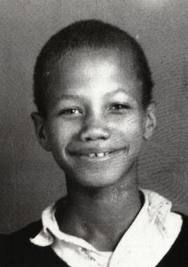
During the course of a long-standing exclusive correspondence with Aliya S. King for NewsOne and GIANT magazine, Malcolm spoke candidly and introspectively about a checkered childhood, an unstable family life, and the burden of being the sole male heir to an icon whose life and legacy have transformed millions of lives.
The following are woven excerpts from hours of conversation with Shabazz:
People often describe me as troubled. I’m not going to say that I’m not. But I’m not crazy. I have troubles. A lot of us do. But you need to understand where I’m coming from and why I am the way I am. Considering what I’ve been through, it’s a miracle that I’ve been able to hold it together. I’m just trying to find my way. [I’ve read newspaper stories about me that] say, “Experts testify [that boy] is psychotic.” The way they describe me is wrong — bi-polar, depression, pyro, whatever. I know I’m not at all. Some of the things I’ve been through, the average person would have cracked.
All my life, I’ve had [moments where] I’ve lived in the lap of luxury in the Trump Towers and not wanted for a single thing. And the very next day I’m [living in] a slum in a gang-infested Philly neighborhood, eating fried dough three times a day. One minute, I’m in a situation with structure and discipline. The next minute I’m running the streets with no supervision at all. One of my aunts has a friend who is very devoted to his children. I was hanging out with them one day and all he talked about was [their] schedule and sports and taking his kids here and there. I wish I had that. I wish I had someone whose purpose in life was to take care of me. That’s how white people do it. They plan for [their] kids. We don’t. That’s cause we don’t plan our kids. I wasn’t planned.
Malcolm Lateef Shabazz was born in Paris, France in 1984. His mother is Qubilah Shabazz, the second of Malcolm X’s six daughters. She was only four years old when her father was killed right in front of her at the Audubon Ballroom in Harlem. According to her son, Qubilah grew up loving nature and being by herself. When she was still a young girl, she chose to become a Quaker. She later attended Princeton University, but left before graduating. As she told the Minneapolis Star Tribune in a 1995 interview: “I was under a lot of social pressure, largely due to who I was. I did not fit the view of who I was supposed to be. I didn’t arrive on campus with combat boots and a beret, and I didn’t speak Swahili.” After leaving Princeton, Qubilah traveled to Paris, where she began studying at the Sorbonne. It was here that she met Malcolm’s father, an Algerian. To this day, her son says he has never met his biological father.
I am [my grandfather’s] first male heir, his first grandson. [I’ve read and been told that] he always wanted a son. No boys in the Shabazz family until me. I used to think [Malcolm X] was my father. My mother told me that. I would ask and she would show me pictures of her father and tell me it was my father. I can’t talk to her about him. Nothing in-depth. She acts like she doesn’t know about him. She was there. She was four years old and sitting right there [when he was killed]. I don’t think she’s ever recovered from that.
How do you [fill out an application at] Denny’s and put down Princeton and the Sorbonne as your education? I felt like she was better than that. And I didn’t like seeing [her work those kinds of jobs.] When I was 3 or 4, we lived in California. I used to run away from home. My mother drank and she would be asleep and I would be unsupervised. [According to various news reports, Qubilah Shabazz has had issues with alcohol and mental illness in the past.] I was very adventurous [so] I would walk up [and down] the street. It would end with the police bringing me home. One day I walked to my day care center [which was] miles away. One day I got on the bus and just hung out away from home and no one said a word. Whole day goes by before anyone stopped me. [My mom] loves me. I’m sure of that. Everyone is not meant to be a parent. She didn’t hug me. She’s just not that kind of person. It used to make me upset and angry [when I was younger].
After California, Malcolm moved to Philadelphia where he lived with his great-grandmother, Madeline Sandlin, the stepmother of his grandmother Betty Shabazz.
She’s a very strong woman. Native American—very strong and stern and strict. She [lived] in North Philly. [Her neighborhood] was so rough. It was so bad, I couldn’t go outside [and] play. It was like being behind bars. I started school at [a private school outside of Philadelphia]. I went to kindergarten and first grade. These kids were rich. [The bus] wouldn’t go to my house. [It] would go to the corner. [The kids] would say, “You live here?” This [white] girl called me a nigger [one time on the school bus]. I didn’t even know what it meant. I [just] knew it was something bad. I wanted to be white. They seemed happy, like they had everything they needed. White was equal to happy and rich. And black [was] just the opposite.
My aunt Attallah was visiting [in Philly] one day. I was looking at a magazine and [there was a picture] of a white boy in a suit. [I took the magazine to my aunt] and I said “I wish I was white like this white boy right here.” She said, “Why would you say that?”
My great-grandmother couldn’t take care of me forever. I ended up in [upstate] New York living with my teacher for second grade [at the school I was enrolled in]. I liked her–I was calling her “Mom.” She had a 16-year-old daughter. I had a pet hamster [and] a bike. I [was] on the Little League team, I [went to] church every Sunday. I had a crush on a white girl named Heidi. I had stability, something I never had before and I liked it a lot. I was the only black kid in the entire school but [I had] a lot of kids to play with. [My aunt] came to pick me up for the summer and I think she didn’t like [the situation]. I was happy and taken care of, but I don’t think she liked it. She [took me] for the summer [and] as it got closer to September I [kept] asking [if I was going back to Kingston]. She kept saying yeah, but I never went back.
I was always happiest around my aunt Ilyasah. She always smelled good. I loved staying at her house because she’d always have a tidy home. I loved being with her. She was always funny. One day we were on [an] elevator and I was about to throw up. She cupped her hands up to my mouth like she was going to catch it. When we got off the elevator, I threw up everywhere, all over the floor, all over her hands, but she kept her hands there. That gesture showed how much she felt about me. [It] made an impression on me. I said back then [that] if I ever had a daughter, I would name her after Ilyasah.
[As for] my grandmother, I never saw her relax. She was speaking at colleges [and] going overseas. On vacation, she would take me to a hotel to swim and she would sit there with books and paper. I never saw anyone work that hard. That’s why I couldn’t live there full time. All [of] my aunts [also] worked a lot [so] I had to shuttle around. That was taught with school. My grades ended up being really poor even though the work was not hard. I wasn’t challenged and the teachers couldn’t make the connection because I was all over the place.
I started driving when I was 9. I would watch my aunt [Check with writer to determine which aunt] and memorize [each step]. One day, early in the morning I took [her] keys. I had difficulty starting [the car] at first, [but] I drove to school [and] parked [and] went to school like it was nothing. My aunt found out and came to school. They didn’t even believe her, but it was true. My mother put me in a mental institution after that. She was really angry. I didn’t belong there. I wasn’t crazy. I had done something wrong and needed discipline. But not [being sent] to a hospital.
[At the hospital] they start asking me all these questions. [Stuff like] Do you hear voices? I was into Marvel comic books at the time. There were two characters I liked, Mister Sinister [from the X-Men] and the Human Torch. [So] I was like, “Yeah, here’s my friend that told me to do it.” I just picked them out randomly and drew pictures of them. But I had no idea it would follow me that way it did. I was just making it all up. One time, my aunt came to visit me. She said “You know you don’t hear voices. You need to stop.” And I did. In my experiences, [the doctors] want to find something wrong with you. That’s how they get paid. When I [was in] jail, they said I was depressed and anti-social. I was in jail. I’m in solitary confinement. They gotta say something [is wrong with you].
INTRODUCTION
His grandmother, Betty Shabazz, widow of Malcolm X, was killed in a fire he started 11 years ago. He was 12 years old. He had been shuttled in and out of correctional institutions until his release from Attica Prison in February 2007. Now MALCOLM SHABAZZ, 24, is on a mission: to clear his name, stay out of jail and rise from the ashes of his past.During the course of a long-standing exclusive correspondence with Aliya S. King for NewsOne and GIANT magazine, Malcolm spoke candidly and introspectively about a checkered childhood, an unstable family life, and the burden of being the sole male heir to an icon whose life and legacy have transformed millions of lives.
The following are woven excerpts from hours of conversation with Shabazz:
People often describe me as troubled. I’m not going to say that I’m not. But I’m not crazy. I have troubles. A lot of us do. But you need to understand where I’m coming from and why I am the way I am. Considering what I’ve been through, it’s a miracle that I’ve been able to hold it together. I’m just trying to find my way. [I’ve read newspaper stories about me that] say, “Experts testify [that boy] is psychotic.” The way they describe me is wrong — bi-polar, depression, pyro, whatever. I know I’m not at all. Some of the things I’ve been through, the average person would have cracked.
All my life, I’ve had [moments where] I’ve lived in the lap of luxury in the Trump Towers and not wanted for a single thing. And the very next day I’m [living in] a slum in a gang-infested Philly neighborhood, eating fried dough three times a day. One minute, I’m in a situation with structure and discipline. The next minute I’m running the streets with no supervision at all. One of my aunts has a friend who is very devoted to his children. I was hanging out with them one day and all he talked about was [their] schedule and sports and taking his kids here and there. I wish I had that. I wish I had someone whose purpose in life was to take care of me. That’s how white people do it. They plan for [their] kids. We don’t. That’s cause we don’t plan our kids. I wasn’t planned.
Malcolm Lateef Shabazz was born in Paris, France in 1984. His mother is Qubilah Shabazz, the second of Malcolm X’s six daughters. She was only four years old when her father was killed right in front of her at the Audubon Ballroom in Harlem. According to her son, Qubilah grew up loving nature and being by herself. When she was still a young girl, she chose to become a Quaker. She later attended Princeton University, but left before graduating. As she told the Minneapolis Star Tribune in a 1995 interview: “I was under a lot of social pressure, largely due to who I was. I did not fit the view of who I was supposed to be. I didn’t arrive on campus with combat boots and a beret, and I didn’t speak Swahili.” After leaving Princeton, Qubilah traveled to Paris, where she began studying at the Sorbonne. It was here that she met Malcolm’s father, an Algerian. To this day, her son says he has never met his biological father.
I am [my grandfather’s] first male heir, his first grandson. [I’ve read and been told that] he always wanted a son. No boys in the Shabazz family until me. I used to think [Malcolm X] was my father. My mother told me that. I would ask and she would show me pictures of her father and tell me it was my father. I can’t talk to her about him. Nothing in-depth. She acts like she doesn’t know about him. She was there. She was four years old and sitting right there [when he was killed]. I don’t think she’s ever recovered from that.
CHILDHOOD
Qubilah left Paris when Malcolm was still very young and moved back to the U.S. He remembers them moving around a lot, living in such places as Los Angeles and Brooklyn. His mother reportedly took odd jobs at places like Denny’s to earn enough to get by.How do you [fill out an application at] Denny’s and put down Princeton and the Sorbonne as your education? I felt like she was better than that. And I didn’t like seeing [her work those kinds of jobs.] When I was 3 or 4, we lived in California. I used to run away from home. My mother drank and she would be asleep and I would be unsupervised. [According to various news reports, Qubilah Shabazz has had issues with alcohol and mental illness in the past.] I was very adventurous [so] I would walk up [and down] the street. It would end with the police bringing me home. One day I walked to my day care center [which was] miles away. One day I got on the bus and just hung out away from home and no one said a word. Whole day goes by before anyone stopped me. [My mom] loves me. I’m sure of that. Everyone is not meant to be a parent. She didn’t hug me. She’s just not that kind of person. It used to make me upset and angry [when I was younger].
After California, Malcolm moved to Philadelphia where he lived with his great-grandmother, Madeline Sandlin, the stepmother of his grandmother Betty Shabazz.
She’s a very strong woman. Native American—very strong and stern and strict. She [lived] in North Philly. [Her neighborhood] was so rough. It was so bad, I couldn’t go outside [and] play. It was like being behind bars. I started school at [a private school outside of Philadelphia]. I went to kindergarten and first grade. These kids were rich. [The bus] wouldn’t go to my house. [It] would go to the corner. [The kids] would say, “You live here?” This [white] girl called me a nigger [one time on the school bus]. I didn’t even know what it meant. I [just] knew it was something bad. I wanted to be white. They seemed happy, like they had everything they needed. White was equal to happy and rich. And black [was] just the opposite.
My aunt Attallah was visiting [in Philly] one day. I was looking at a magazine and [there was a picture] of a white boy in a suit. [I took the magazine to my aunt] and I said “I wish I was white like this white boy right here.” She said, “Why would you say that?”
My great-grandmother couldn’t take care of me forever. I ended up in [upstate] New York living with my teacher for second grade [at the school I was enrolled in]. I liked her–I was calling her “Mom.” She had a 16-year-old daughter. I had a pet hamster [and] a bike. I [was] on the Little League team, I [went to] church every Sunday. I had a crush on a white girl named Heidi. I had stability, something I never had before and I liked it a lot. I was the only black kid in the entire school but [I had] a lot of kids to play with. [My aunt] came to pick me up for the summer and I think she didn’t like [the situation]. I was happy and taken care of, but I don’t think she liked it. She [took me] for the summer [and] as it got closer to September I [kept] asking [if I was going back to Kingston]. She kept saying yeah, but I never went back.
ADOLESCENCE
As Malcolm tells it, he led a nomadic childhood, living at different times with his mother, his grandmother and his aunts.I was always happiest around my aunt Ilyasah. She always smelled good. I loved staying at her house because she’d always have a tidy home. I loved being with her. She was always funny. One day we were on [an] elevator and I was about to throw up. She cupped her hands up to my mouth like she was going to catch it. When we got off the elevator, I threw up everywhere, all over the floor, all over her hands, but she kept her hands there. That gesture showed how much she felt about me. [It] made an impression on me. I said back then [that] if I ever had a daughter, I would name her after Ilyasah.
[As for] my grandmother, I never saw her relax. She was speaking at colleges [and] going overseas. On vacation, she would take me to a hotel to swim and she would sit there with books and paper. I never saw anyone work that hard. That’s why I couldn’t live there full time. All [of] my aunts [also] worked a lot [so] I had to shuttle around. That was taught with school. My grades ended up being really poor even though the work was not hard. I wasn’t challenged and the teachers couldn’t make the connection because I was all over the place.
I started driving when I was 9. I would watch my aunt [Check with writer to determine which aunt] and memorize [each step]. One day, early in the morning I took [her] keys. I had difficulty starting [the car] at first, [but] I drove to school [and] parked [and] went to school like it was nothing. My aunt found out and came to school. They didn’t even believe her, but it was true. My mother put me in a mental institution after that. She was really angry. I didn’t belong there. I wasn’t crazy. I had done something wrong and needed discipline. But not [being sent] to a hospital.
[At the hospital] they start asking me all these questions. [Stuff like] Do you hear voices? I was into Marvel comic books at the time. There were two characters I liked, Mister Sinister [from the X-Men] and the Human Torch. [So] I was like, “Yeah, here’s my friend that told me to do it.” I just picked them out randomly and drew pictures of them. But I had no idea it would follow me that way it did. I was just making it all up. One time, my aunt came to visit me. She said “You know you don’t hear voices. You need to stop.” And I did. In my experiences, [the doctors] want to find something wrong with you. That’s how they get paid. When I [was in] jail, they said I was depressed and anti-social. I was in jail. I’m in solitary confinement. They gotta say something [is wrong with you].